tanzania

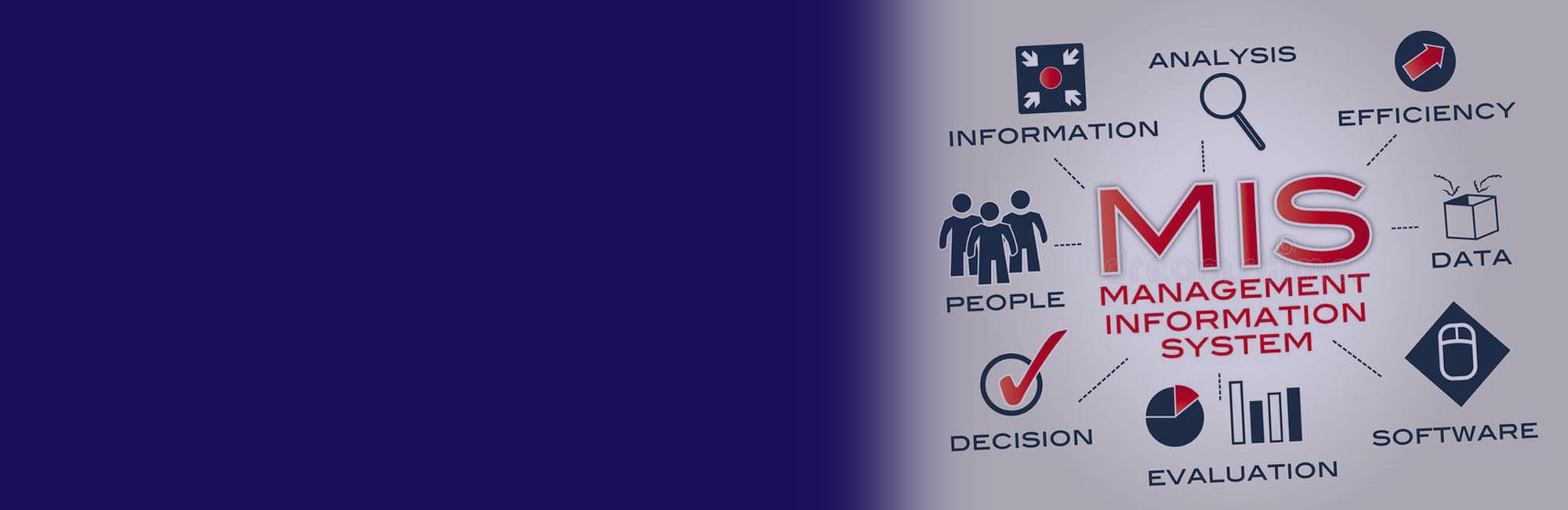
ManageMent Information System

MIS provides real-time data that is crucial for informed decision-making. operational efficiency, data management, collaboration, customer service, and strategic planning.

Get In Touch

Custom MIS Application Development

Empowering Enterprises with Intelligent, Scalable, and Secure Management Information Systems

In an age when data driven decisions define competitive advantage, the use of a software that can be purchased off-the-shelf should not be the standard. Every company has its own workflows, compliance requirements and growth objectives. Your Management Information System (MIS) should reflect that uniqueness.

We create Custom MIS applications tailored to your business processes. Through our custom solutions, you can strengthen various organizational operations - from user access and inventory to finance and tax - into one unified robust platform that will help you increase efficiency, decision-making, and management at all levels of your organization.

With Orisys Infotech, you're not simply buying software. You're investing in a long-term digital backbone that can scale to adapt your current business operations while also being flexible enough to handle future challenges, change in regulations and organizational growth.
Why choose Orisys Infotech for your custom MIS application?

Comprehensive Development Process - We take all of the steps from analyzing your needs and building out the architecture to delivery, testing, and support after we have launched your customized MIS application.

Scalable Architecture - Our systems are designed to scale with your business to support more users, data, or more transactions.

Built for Compliance - Our systems are compliant to meet all regulatory, tax, and industry standards.

Prioritizing Data Security - We put access controls, encryption, and audit trails in place to protect sensitive information.

Components of MIS Application

User Management

The User Management Module is an integral part of any good MIS application. It manages user access and capacity, but also ensures that user actions can be controlled or monitored, recorded, audited and would not have been able to do things like skip controls.
Key Functionalities:

  • Role-Based Access Control (RBAC) - You can create roles such as Admin, Manager, Operator or Auditor and grant different permission levels to each role based on different sections of the system.
  • User Authentication & Authorization - Utilize secure logging methods, enforce password guidelines, utilize multi-factor authentication, and properly manage user sessions.
  • User Provisioning & De-provisioning - Streamline the process for onboarding or offboarding of users to speed up access granting and denial.
  • Hierarchical User Structuring - Facilitate organizational hierarchies with support for departments & approval workflows organised according to reporting lines.
  • Event Logging & Audit - Deliver transparency into user activity for accountability, compliance and investigation.
  • Single Sign-On (SSO) integration - Users can log in to multiple interrelated systems and applications without needing to re-authenticate.
  • Self-Managed Profile Management - Give users the ability to manage their profile data, reset passwords and change settings securely on their own.
  • Access Request and Approval Workflows - Organized approval paths for higher-level access or special permissions.

Inventory Management

Our Inventory Management System (IMS) is perfectly integrated into the MIS application, designed for scalable growth, optimal performance, and seamless adaptation. It will help businesses monitor their inventories, optimize their operations, and make informed decisions in procurement, storage, and distribution.
Key Functionalities:

  • Real-Time Stock Monitoring - Get constant insight on the status of inventories in different warehouses and/or locations.
  • Tracking via Batch and Serial Numbers - Track stocks using batch numbers, lots numbers, and their expiration dates.
  • Multiple Warehouse Inventory Management - Manage inventories in several warehouses or branches from a single interface.
  • Tracking Inwards & Outwards of Stocks - Record everything connected with receipt, issue, transfer, and return of stocks.
  • Integrating Barcodes & QR Codes - Easier identification and documentation of stocks.
  • Reconciling and Auditing - Perform regular reconciliations and get reports about discrepancies and correction.
  • Forecasting & Analytics - Provides data-driven insights allowing you to forecast demand and save on storage costs.
  • Integration with Procurement and Sales Modules - Smooth data exchange and reliable information about inventories throughout the business cycle.

Tender Sales Process

To enable an efficient Tender Sales Process in a Management Information System there has to be a sound process through which tenders are handled from notification through to award.

The tender sales process at Orisys Infotech has been upgraded with many features that are used to support the tender sales process, improve decision making, and to deliver both procurement and sales with added value.

  • Tender Notification & Publication - We manage the creation and publication of tenders and ensure their clear timetables.
  • Bid Submissions - Our system handles bids and proposals from vendors/bidders efficiently.
  • Eligibility and Document Verification - The automated system checks if the bid complies with the requirements through a checklist and ensures all mandatory documents are attached.
  • Technical and Financial Bid Evaluation - A scoring system is the main tool used with the help of which evaluation is conducted in objective and transparent manner.
  • Tender Comparison Statements - System can automatically generate a comparison of all bids at once.
  • Approval Workflow & Tender Awards - The multi-level approval workflow ensures the tenders are finalized and the results of the award are made public.
  • Earnest Money Deposit & Security Deposit - The system handles the deposits, such as refunding and forfeiting, on automated way.
  • Contract Generation - After a contract is awarded by a tender, the system automatically issues a new one or generates a purchase order.

e-Auction Sales Process

Configuring a custom e-Auction Sales Process within a Management Information System (MIS) consists of merging organized workflow, instantaneous data updates, and a user-friendly interface. This is to make sure that all sales transactions are open and fair so that bidders have the same opportunity.
Key Functionalities:

  • E-Auction Scheduling and Notifications - Decide on e-Auction timing as per your requirements, with automatic notification of time being sent to bidders.
  • Live Interactive E-Bidding Platform - Bidder's screens will automatically refresh with new information so that bidding decisions are made on up to date data and therefore no mistakes.
  • Bidder registration & Verification - Identity validation and verification of eligibility are features of this process ensuring a safe, secure registration for all users.
  • Minimum price & Price change rules - Modify the parameters for bidding to suit the auction at hand.
  • Automated Bid Ranking - Bidders are ranked on the screen showing highest/lowest bids live as per the bids they make.
  • Time extension - The timer gets extended automatically so that everyone has equal chance to bid.
  • Cash & EMD Processing - Money Receipt is integrated with Online Money Depository to process deposits easily and seamlessly?
  • Report Generation - Post e-auctions, a detailed analysis with breakdown of participation and earnings will be available for download and further use.
  • Resolving disputes & Addressing complaints - Bidders can freely and fairly raise their concerns or complaints and they will all be dealt with in an open manner, if needed, within a well-documented ?procedure.

Online Money Receipt

With the Online Money Receipt module the task of receiving, recording and following up on payments can be done without any manual work thus significantly saving time and ensuring reconciliation happens in no time.
Key Fuctionalities:

  • Online Payment Mode - Facilitating modes like online banking, UPI, debit/ credit cards, and online payment portals.
  • Receipt Generation in Instant Mode - A digital receipt is issued after verifying whether the payment was successfully made or not.
  • Live Tracking of Payment Status - The user is able to monitor the state of transactions whether it is yet to be processed or confirmed or if the payment was rejected.
  • Auto Ledger Reconciliation - Receipts get posted to respective customers' or vendors' books automatically.
  • Partial & and installment Payment Support - The system makes it easy to deal with the case of part-payments or the splitting of dues into installments for repayment.
  • Alerts for Payment Reminders - Automated notifications to let you know about payments you are about to miss or have already missed.
  • Refund Payment - There is a systematic procedure to go through the refund and reverse a payment.
  • Deep Dive into Payments - The finance department is in for a wealth of insightful reports that will be of great use in conducting audits and ??reconciliations.

Document Generation Process

Building a Document Generation Process means setting up a kind of structured, automated pipeline so business-critical documents get made, handled, and sent out in a consistent way. It is less about "one time creation" and more about keeping everything repeatable , trackable, and still useful when things change.
Key Functionalities:

  • Template Based Document Creation - Using standardized templates for invoices, agreements, letters, and even summaries.
  • Dynamic Data Population - The system should auto-fill documents with live information coming from connected MIS modules.
  • Digital Signature Integration - A legally compliant e-signature flow for approvals, and for contracts too.
  • Version Control & Document History - Full visibility of every revision plus the entire change logs.
  • Automated Document sending - Rule-based sending of documents to the right stakeholders, or departments based on the context.
  • Bulk Document Generation - Making big volumes of documents quickly (invoices, notices, certificates).
  • Secure Document Storage & Retrieval - Central repository, searchable, and protected with access-controlled retrieval.
  • Export & Format Flexibility - Ability to export into PDF, Word, Excel , and also print-ready formats.

Billing And Disposal

So the Billing and Disposal module kind of meant to automate it and sort of streamline billing stuff , payment tracking, and also how asset or material disposal is handled, all in one. It's not just "manage bills", it's more like keep everything flowing without so many manual touches, ya know.
Key Functionalities:

  • Automated Invoice Generation - Rule based creation of accurate itemized bills , pretty consistent.
  • Recurring & One-Time Billing Support - Billing cycles that can move around, for different business model needs.
  • Payment Tracking Analysis - Real time visibility into what's still owed and which accounts are late .
  • Disposal Request & Approval Workflow - A structured path for identifying, approving, and then executing asset disposal.
  • Scrap & Surplus Management - Tracking and valuation of disposed materials or obsolete inventory, basically after the result published.
  • Integration with Ledger & Taxation Modules - Automatic financial posting, plus tax computation on both billing and disposal transactions.
  • Disposal Compliance Documentation - Auto generated records , to help meet statutory and environmental compliance requirements.
  • Reporting & Analytics - Views of billing trends, disposal proceeds, and revenue recovery results, in a way that's actually usable.

Auto e-Invoice Generation

With a direct API link to the Government of India’s GST Portal, businesses can streamline and, kind of automate their GST tax compliance routines , in a quicker way while keeping the output precise.

In practice, this integration builds a smooth connection between your own internal systems and the GST Network (GSTN) so data can travel in near-real-time and be interacted with properly. There are several key operations that are supported here, such as these little core ones:
Key Functionalities:
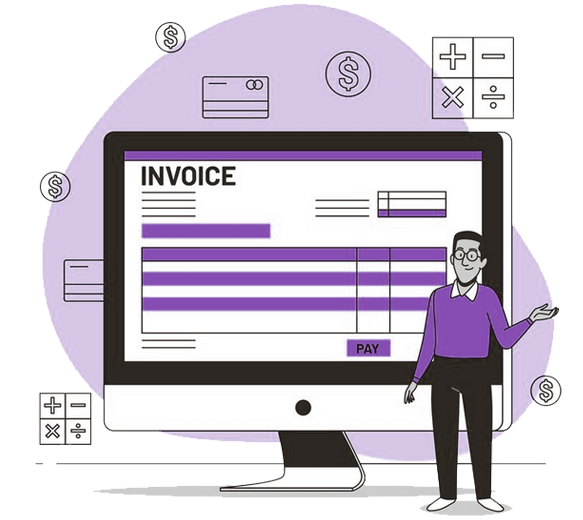
  • Real-Time e-Invoice Generation - Fast creation and onward submission of GST-compliant e-invoices, almost as it happens.
  • Invoice Reference Number (IRN) Generation - Automatic IRN along with QR code generation right from the GST Portal itself.
  • e-Way Bill Generation - Easy e-way bill creation that stays linked to the relevant invoice.
  • GSTR Data Auto-Population - Invoice data gets fed into GST return filings automatically, meaning less manual typing.
  • Error Validation & Correction - Built in checks that catch invoice inconsistencies and help fix them before you submit.
  • Bulk Invoice Processing - Handling large quantity invoice runs , with less friction and better throughput.
  • Real-Time Status Tracking - Live visibility for acceptance , rejection, or even pending states coming from GSTN.
  • Compliance Audit Trail - A complete historical log of every e-invoicing event, useful for statutory audits and reviews.

After Sales Management

The After Sales Management module is pretty crucial to keep customer satisfaction high, and to build long-term business relationships, by doing proactive structured after-sale support. Like, not just waiting around after the purchase.
Key Functionalities:

  • Service Request & Ticket Management - one place for logging and tracking customer service requests, centrally.
  • Warranty & AMC Tracking - automated monitoring of warranty periods and Annual Maintenance Contracts, so nobody misses the window.
  • Field Service & Technician Scheduling - smooth assignment and tracking of on-site service visits, based on availability.
  • Service History & Documentation - detailed record-keeping of all service interactions, per customer/asset, with proper documentation too.

Financial Modules

A robust MIS application must be anchored by a comprehensive, compliant, and transparent finance backbone. Orisys Infotech's Finance Modules are built to ensure accuracy, regulatory adherence, and operational efficiency across every financial function of your organization.

Ledger Management

A Ledger Management System is a must for organizations that seek to record transactions accurately, report on finances with ease and confidence while complying with applicable laws and regulations.
Key functionalities:

  • General Ledger Maintenance - All financial transactions of an entity are captured in the General Ledger. The General Ledger contains all financial transactions and serves as the foundation for preparing financial statements and reports.
  • Sub-Ledger and Chart of Accounts Management - It is good practice to categorize and sub-categorize financial data based on departments, cost centers, and accounts payable/receivable.
  • Automated Journal Entries - There is always a need to capture business events in the accounting system. Some entries can be automated depending on the design and the extent of automation of other modules.
  • Trial Balance and Financial Statement Generation - Financial Statements such as the Balance Sheet and Income Statement are captured in the General Ledger and can be automatically generated.
  • Multiple Currencies and Entity Support - Organizations that operate in more than one entity may need to report on their financial performance both in terms of currency and entities.
  • Ledger Reconciliation - Reconciliation of systems enables you to ensure that the information captured in the ledgers corresponds to the actual cash or bank balances.
  • Closing & Month-End Activities - Activities corresponding to Month-End, Quarter End, and Year-End are configured differently and should be treated accordingly.
  • Management Reports - Financial reports can be customized according to user needs and can be helpful in statutory reporting and management decision-making.

Bank Management

Developing a bank management module is basically required if you want to automate, and also systematize banking operations. It helps in boosting operational efficiency, makes customer service smoother, and keeps everything aligned with regulatory , industry compliance requirements.
Key Functionalities:

  • Multi bank account management - gives you centralized sight and control over many bank accounts at once.
  • Bank reconciliation automation - does the automated matching of bank statements with your internal transaction records, so there is less manual handling.
  • Cheque management - covers tracking of cheque issuance, clearance, bouncing events, plus stop payment instructions when needed.
  • Fund transfer & payment processing - provides secure processing for NEFT, RTGS, IMPS and other transfer modes, without the usual fuss.
  • Cash flow monitoring - gives real time visibility into cash inflows and outflows across accounts , so gaps get noticed early.
  • Bank guarantee management - keeps a record of the issuance, validity period, and expiry dates of bank guarantees.
  • Interest & charges calculation - automates the computation for interest income, bank charges, and applicable fees.
  • Audit ready transaction logs - maintains complete time stamped records for both statutory and internal audits, so you can produce them quickly.

TDR (Term Deposit Receipt) Management

The implementation of a TDR Management module makes it possible for companies to efficiently manage all Term Deposit Receipt transactions.
Key Functionalities:

  • Creation, Renewal and Cancellation of TDRs - Efficient creation, renewal and cancellation process of term deposits.
  • TDR Maturity Monitoring and Alerting - Automatic alerts prior to maturity dates to facilitate decision-making.
  • Interest Calculation and Accrual Monitoring - Precise interest calculation according to term deposit period and rates.
  • TDR Premature Withdrawal Management - Process flow for premature withdrawal requests with penalties calculation.
  • TDR Accounting Ledger Integration - TDR accounting ledger integration with other ledger and banks modules.
  • Portfolio of TDRs - Centralized portfolio of active, matured and closed TDRs.
  • Documentation and Compliance - Automatic creation of TDR certificates and compliance documentation.

IDT (Interdepartmental Transfers)

The introduction of the Interdepartmental Transfers (IDT) module facilitates an effective mechanism for the management of financial transfers within the departments.
Key Functionalities:

  • Transfer Request Creation - Standard transfer request format for money and resource transfer between the departments.
  • Multi-Level Approval Process - Multiple level approvals before initiating any transfer.
  • Automatic Ledger Posting - Immediate posting of transactions in departmental ledgers.
  • Budget Implications - Knowledge of the impact of transfers on departmental budgets.
  • Transaction History and Audit Trcking - Traceability of all inter-departmental transfers.
  • Reconciliations & Reports - Periodic report generation for resolving differences between the interdepartmental transfers.

Vouchers

Implementation of Voucher Management System creates a comprehensive structure to manage various kinds of vouchers - such as journal vouchers, payment vouchers, and receipt vouchers.
Key Functinalities:


  • Creation & Categorization of Vouchers - Systematic creation of vouchers such as Journal, Payment, Receipt, and Contra vouchers.
  • Management of Approval Workflow - Multilevel approval system prior to voucher postings.
  • Automatic Numbering & Sequencing - Vouchers are automatically numbered without any possibility of repetition or omission.
  • Attachments & Supporting Documents - Facility to upload documents such as invoice, bill or receipt against vouchers.
  • Posting of Vouchers - Easy posting of all the approved vouchers in the general ledger.
  • Vouchers Cancellation & Reversal - Process to reverse the erroneous vouchers.

Taxation

The creation of a Taxation module ensures that there is an elaborate and well-structured framework for handling taxation processes effectively in terms of standardization and compliance.
Key Functionalities:

  • Computations and Filing of GST / VAT - Automated tax computations based on relevant slabs.
  • Tax Deducted at Source and Collected at Source Management - Automation in tracking of taxes collected/deducted at source.
  • Assistance in Preparation of Tax Returns - Automated collection of relevant data to assist in filing of periodic/annual tax returns.
  • Automated Reconciliation of Tax Liabilities - Automation in reconciliations with respect to ledgers and invoices.
  • Exemptions and Deductions - Automation in management of exemptions and deductions as per rules.
  • Reminders for Tax Obligations - Automated reminders with respect to tax filing and other statutory obligations.
  • Tax Reporting - Detailed tax reporting to assist in internal reviews/statutory audits.

Api Integrations

E-Invoicing API integration to interact with GST PORTAL of GOVT. OF INDIA to check GSTIN details of Customers, to generate GST Invoice Against B2B Sales of Items to Customers with Scope to Cancel e-Invoice (if required)

Banking API Integration to mark customers as Beneficiary and to instantly transfer fund from Own Account to Party Account.

Payment Gateway Integration to facilitate customers to pay online.

POS API Integration to facilitate customers to pay through POS Devices at different retail Sales Counters.

Digital Signature Certificate Integration to generate Digitally Signed documents

SMS Gateway Integration to send SMS on different instances.

The Orisys Infotech Advantages For Custom MIS Development

  • First off, Deep Domain Expertise , we're talking about years of experience delivering MIS solutions across procurement, finance, sales, and after-sales too.
  • Then there is the Agile Development Methodology part, which is basically iterative development , making everything clearer to stakeholders, flexible, and well, faster delivery- usually.
  • Also, Seamless Third-Party Integrations , you get a robust API-driven integration with government portals, payment gateways, and banking systems, all of it connected without much hassle.
  • And yes, Dedicated Support & Maintenance , meaning continued technical support, updates, and ongoing enhancements after deployment, not just a handoff.
  • Finally, Data-Driven Decision Enablement , where dashboards and analytics are embedded across every module, so the insights are right there when people need them.

Looking for a Way to Enhance Your Business Operations?

Work with Orisys Infotech to develop a Custom MIS Application that will help you streamline your business processes, enhance compliance and ensure quick and better decision making.

Talk to us now and take advantage of a free consultation on how a Custom MIS application can help your organization take the next step ahead.