A booking engine is easy to buy. Building a booking business is something you need to do.
Imagine two travel companies starting business at the same time. They both sell Himalayan treks, and they both pay a script for a ready-made booking on day 1. After six months, one is lost in spreadsheets: group discounts are applied with a spreadsheet, partner agents call for quotes and refunds are tracked in a chat thread. The other has a portal that instantly quotes a ten-person group rate and provides each agent with their individual net rate, without having to press a single key.
Budget or marketing was not the difference here. It was whether the software was designed around how the business earns revenue .
The Problem With rented / ready-made Software
The template booking tools make the assumption that all travel companies function in the same fashion: search, select, pay, done. Real operators don't. A houseboat in Kerala charges a nightly rent, but it is blocked on a seasonal basis. To create a ticket for a corporate client, you must first get approval. A wholesaler desires to charge different prices to the agents than he will charge to the public.
Where the software is inadequate to represent these rules, staff fill the gap with manual work. That's work that you cannot see on the invoice sent by the template vendor, but can see as slow replies, pricing errors, and tired teams. There is a custom portal to transfer that work from people to code.
What a Development Company Actually Does
Hiring a travel portal development company is not the same as having someone to create a site. The actual work takes place in four layers, but only the first layer is visible to your customers.
 The storefront. Designed for the way your travelers decide, search, filters, itinerary pages and checkout. The pilgrim-buyer requires reassurance and dates. You need speed when you're buying a weekend getaway.
The rules engine. Markups, commissions, tax, cancellation slabs, seasonal pricing and promo logic. This is where your margin resides and is the layer templates that are the worst offenders.
The supply connections. Links to airlines, hotel aggregators, activity providers and local vendors, through APIs or direct contracts, kept in sync to ensure that what you sell is actually available.
The back office. Booking queues, payments from suppliers, reconciliation, reports, permissions, and more so your team can operate the business without having to call a developer.
Template or Custom: A Plain Comparison
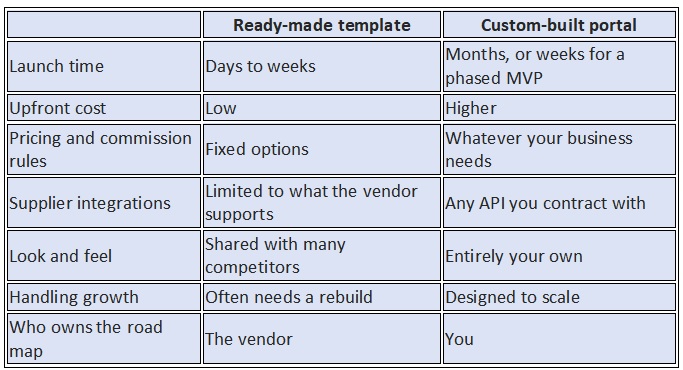
Templates win when you are testing an idea. Custom wins when the idea works and operations start to strain.
Five Questions to Ask Before You Sign
A good partner will welcome tough questions. These five separate travel specialists from general web agencies.
 What APIs with which suppliers have you used and can I speak to that client? Experience of GDS systems, hotel aggregators and payment gateways saves months..
What will be the model for my pricing rules? If the response is ambiguous, it's going to be a surprise later on.
What happens when a supplier changes their API? Travel connections break more often than most software.
What are your policies regarding payments, bookings not made and refunds? When things go wrong, the unhappy paths determine if customers trust you.
How is support to be provided after the launch? A portal is not a delivered file, it is a living product.
Start Small, Then Grow
The most successful custom portals can probably be said to rarely open with all the elements. They start with one product, one or two supply sources, and the pricing rules that are significant. Real bookings now reveal the places of friction, and the next release addresses it. This way it is easy to keep initial expenses down, and avoid the downfall of constructing unnecessary features that nobody will use.
A basic first release typically includes search, booking, payment, confirmations and a basic administration panel. Soon to follow, mobile applications, loyalty programs, AI recommendations and multi-language options - when they are justified by demand.
The Takeaway
A travel portal isn't a website that has a payment option. It's the equipment which transforms your provider relationship and local knowledge into extended income. The right software development company isn't just a code delivery service. It learns your money-making system, and creates one that will allow you to make more money more easily.
If you find a partner that asks you the margins before they start discussing anything else, the rest tends to follow.